20 August 2019 | Tata International Africa
Tata Celebrates Women in Science and Technology
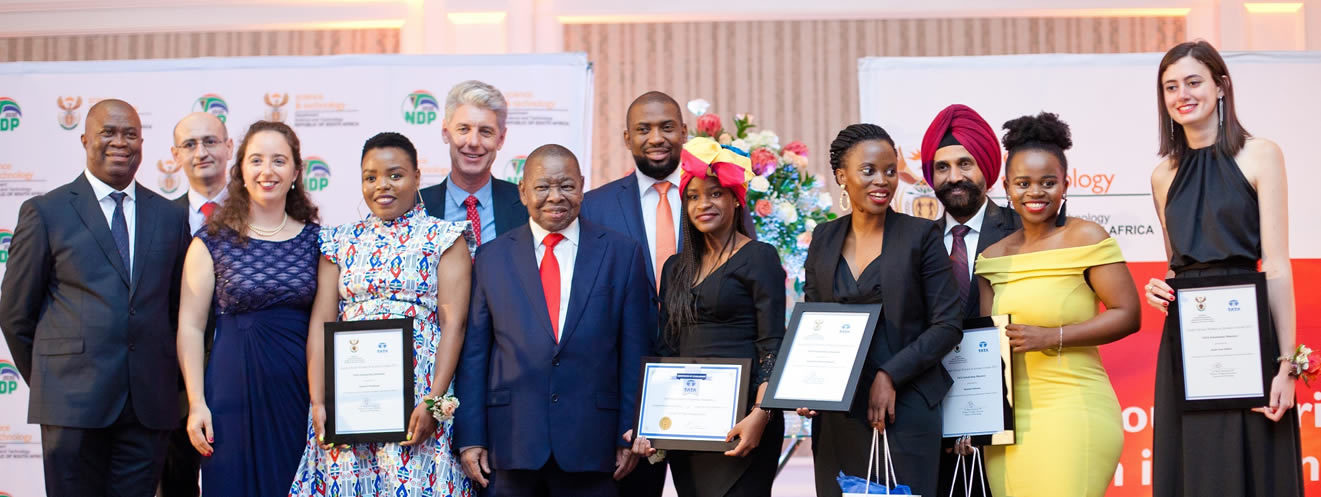
Tata International in Africa celebrated women in the Science, Technology, Engineering, Mathematics (STEM) industries by awarding scholarships worth over R500 000 to six recipients at the 2019 South African Women in Science Awards (SAWiSA), held at the Boardwalk Hotel and Convention Centre in Port Elizabeth on Thursday 15 August.
SAWiSA is an initiative of the Department of Higher Education, Science and Technology and was hosted by the Minister of Higher Education, Science and Technology, Dr Blade Nzimande.
Now in its 15th year, the awards recognise and reward excellence by women scientists and researchers who are South African citizens or permanent residents and profile them as role models for younger women. The theme for the 2019 SAWiSA was making the fourth industrial revolution work for women.
“We are not going to affirm the role of women in the 4IR unless we simultaneously intensify the mobilisation of society against patriarchy, gender inequality and gender-based violence, amongst others,” said Minister of Higher Education, Science and Technology, Dr Blade Nzimande.
“As a department and government, we are investing in training and lifelong learning for women. In dealing with women empowerment, as a department, we aspire to transform our higher education science and innovation centres to be of high quality and demographically representative in order to provide students and staff with opportunities for better access and success.”
Len Brand, CEO of Tata International Africa and Dr. Gerda Botha, Chairperson of the Board of the South African Council for Natural Scientific Professions presented the Tata scholarships to full-time postgraduate Masters and PHD students in areas where participation by women is traditionally low.
One of the recipients, Sibabalo Noludwe who is studying her Masters in Electrical Engineering with a research topic on power system residency was excited to receive the scholarship from Tata. “This award means so much to me and I hope it serves as an inspiration and awareness to other young women to pursue their studies and research within the field of science and engineering,” she said.
Tata International in Africa advocates for empowerment and heightening the role of women in science and have awarded deserving recipients with scholarships over the last 10 years.
“It is important for us to invest in women in South Africa, especially within the field of science and technology. At Tata we believe in empowering people through giving back and promoting social and economic development of local communities through education, this is one of the key components of the Tata business values and belief system. We feel very proud to be associated with SAWiSA and we hope to continue this long-standing partnership,” said Len Brand.
This year’s Tata and SAWiSA scholarship recipients are: Sibabalo Noludwe (University of Cape Town), Sarah Jane Selkirk (University of Cape Town), Mokgadi Mahlatse Nchabeleng (University of the Witwatersrand), Nomonde Sharon Malanda (Instituto de Empresa, Spain), Katekani Shingange (University of the Free State) and Julia Lynn Healy (University of Cape Town).
15 June 2019 | Tata International Africa
Tata Wins Two Awards at NADA Dealer Satisfaction Index Awards
Recent improvements to dealer, parts and service networks – with a view to maximising vehicle uptime – have contributed to Tata Commercial Vehicles receiving two prestigious awards, Most Improved and a Silver Award overall, at the National Automobile Dealers’ Association (NADA) Dealer Satisfaction Index Awards (DSI), held recently in Johannesburg.
The NADA DSI survey, which marks its 24th anniversary this year, is carried out annually to monitor the health of the relationship between dealers and their respective manufacturers. It provides the dealer body with a platform to provide manufacturers and importers with robust feedback.
The results for the awards are calculated from a scorecard with respective questions given various weightings. Bronze winners score between 65 and 69.9 points, Silver between 70 and 74.9, and Gold between 75 and 84.9. Platinum winners score greater than 85 points.
The Most Improved award in the commercial vehicles’ category went to Tata Commercial Vehicles. The results showed an upward movement of 7.5 points and catapulted them from a Bronze last year to Silver this year.
“It is an honour to be recognised by our dealer partners. Thank you to all Tata dealers who participated in the 2019 survey. Tata’s UPTIME strategy is bearing fruit as seen in the results of the NADA DSI survey. We are committed to strengthening our relationships with our dealer partners going forward,” says Len Brand, CEO, Tata International Africa.
The results are divided into a number of key focus areas. The Customer Focus category places emphasis on ease of doing business and setting the standard for excellence in the industry. Tata Commercial showed great improvement in this category while most of the brands lost ground in this area.
Dealers were asked to rate different training programs provided by their respective manufacturer / importer. These included technical training, non-technical training, sales training and training for customers’ drivers. The most improved brand in this category is Tata Commercial with a significant improvement, moving from to 5th to 1st position in 2019.
Dealers were also asked: “Does the range of commercial vehicles over 3500kg GVM available from your manufacturer / importer allow you to compete adequately in the market?” Tata managed to improve its score with dealers being satisfied with the range of vehicles available to them.
Parts availability is crucial to dealer profit, turnaround time and ultimately a satisfied customer.
The Parts category also includes questions probing delivery times on parts, the parts delivery system, parts ordering system, parts return policies and the support provided to the dealer when parts are not readily available. Tata made notable improvements this year in the score card.
Goodwill, Policy Claims & Warranty: This section covers the support received from the manufacturer / importer regarding goodwill claims, clarity of the warranty claim procedures, fairness and relevance of warranty audits and whether reimbursement payments are made timeously. This category is the overall highest rated category in 2019. Tata recorded a significant improvement in this category in 2019.
Tata also recorded notable improvements in the Labour Rates category.
19 September 2019 | Tata International Africa
How Investing in Small Business Entrepreneurship can Benefit Big Business
By Len Brand, CEO, Tata International Africa.
Businesses are dependent on the social, environmental, and economic sustainability of the communities in which they operate. Investing in initiatives which empower more people to become self-sufficient can have far-reaching benefits. The proverb ‘give a man a fish, and you feed him for a day; teach a man to fish, and you feed him for a lifetime’ is still one of the most powerful ways businesses can pay it forward.
Before I came on board in August 2016, the Tata Africa business was not in good shape. But execution of strategic initiatives which involve leading major organisational and cultural change to propel and sustain revenue growth is what I live for. It was a challenge that I relished.
Fast-forward two-and-a-half years and I am pleased to say that, through a clearly defined ‘uptime’ turnaround strategy, we managed to achieve a 20% jump in turnover, and the business was returned to solvency.
It is all about uptime
In essence, uptime is the opposite of downtime. For commercial vehicles like trucks and buses, uptime is the period when that vehicle is up and running, and downtime is when it is off the road for maintenance or repairs. Obviously when human capital or other assets go down, the business suffers financially. So, the quicker we can get that vehicle back on the road, helping its driver or owner to earn an income, the better.
Access to parts and service
Before the implementation of our uptime strategy, Tata International Africa’s network consisted of independent 3S and 2S dealers in South Africa and Kenya, with Tata acting as importer and dealer elsewhere on the continent. All these facilities were in the main cities of each country.
A 3S facility is a dealership which offers sales, service, and spare parts. A 2S facility, usually owned by a private individual, offers only services and spare parts. Up till that stage, a 1S facility was just a guy selling grey import spare parts out of a container.
In order to truly grow our footprint, to create the economies of scale we needed across the continent, we had to transform Tata’s network in Africa through an innovative development programme.
So, in line with the ethos of the Tata family conglomerate and their unwavering commitment to job creation, education, and skills development, especially in the areas of youth employment, and community and social upliftment, we set out to empower existing small business owners to become entrepreneurs.
Empowering entrepreneurs
It is important to understand that not all small business owners are entrepreneurs. While they are both self-employed, there are some distinct differences.
Small business owners are often sentimental, seeing their business as part of the community and part of the family. They are generally happy with the way things are, and content to simply carry on making a living, with limited growth and profitability.
Entrepreneurs, on the other hand, are not in business to simply achieve a level of income to support their current lifestyle. They are driven by passion or opportunity, and focus on innovative offerings, targeting rapid growth and high returns.
Our development programme was focussed on identifying those small business owners with entrepreneurial flair, and equipping them with the skills they needed to implement business processes and operating efficiencies to take their businesses to the next level.
We chose existing 1S facilities, strategically picking the ones already operating in prime locations, and offered to sell them genuine spare parts at a discounted rate, with a one-year buy-back guarantee.
We also offered free training for roadside mechanics, bringing them into one of our 3S or 2S facilities for three or four days, and training them on how to fix our vehicles.
Investment bears fruit
Our 1S pilot in Tanzania was a huge success. We have already seen the entrepreneurial results of the time and money we have invested in this programme.
When one of our customers’ trucks or buses break down, these Tata-trained roadside mechanics now go to their nearest 1S facility, buy the genuine parts, and fix the vehicle as quickly as possible.
There has also been a shift in our buying behaviour, as they have started buying spare parts from 1S facilities closest to them. Not only are they supporting small businesses in their communities, but in doing so, they are also able to get their customers’ trucks and buses up and running as quickly as possible.
All of this supports and bolsters our uptime strategy – positioning ourselves as the brand of choice in Africa for vehicles with the least amount of downtime. It is a virtuous cycle.
The whole is greater than the sum of its parts
In South Africa, we still have more than 30 3S dealers, and have increased our 2S touchpoints to 91. We can reach a broken truck or bus in less than two hours. We are doing the same across the rest of the continent, where we have expanded our own 3S facilities beyond just the main cities, and added numerous independent 2S and 1S touchpoints. As you travel through Africa, you know there will be a Tata touchpoint somewhere along the way.
Our aim is to continue growing our brand awareness, to be top of mind for commercial vehicles on the continent, and ultimately for the Tata brand to be as big and respected in Africa as it is in India.
Note: Prior to his current position as CEO at Tata International Africa, Len Brand spent 22 years focussed on agricultural mechanisation equipment, and golf and turf equipment, in sub-Saharan Africa, Germany, and the United States, six of which were spent in the role of MD at John Deere Sub-Saharan Africa. He is a University of Pretoria alumni, with a BSc in Industrial Engineering, and also sits on the BRICS Institute’s Advisory Board.
4 May 2019 | Tata International Africa
Comprehensive Tata and Daewoo Truck ranges on show at Nampo
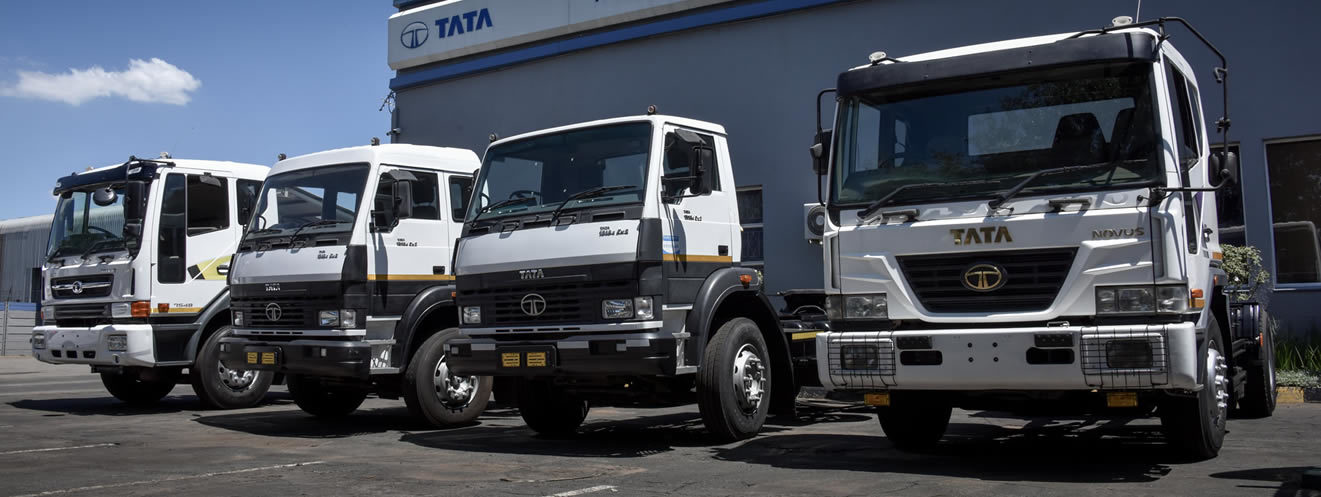
Tata Automobile Corporation SA (TACSA) is honoured to be part of the greatest Agricultural showcase in South Africa. For the past 11 years we have showcased our range of commercial vehicles in Bothaville and this year is no exception. This year we are privileged to add our Korean Daewoo commercial trucks to the range of models in our line-up.
The Nampo annual agricultural show is a fantastic platform for TACSA to introduce new models but also to showcase our tried and trusted vehicles in the commercial segment. Nampo also presents a large footprint for potential Tata and Daewoo truck customers. The commercial vehicles on display this year represent a variety of applications and solutions for our customers.
At Nampo 2019 Tata and Daewoo will exhibit a variety of commercial transport applications including farming, construction and buses.
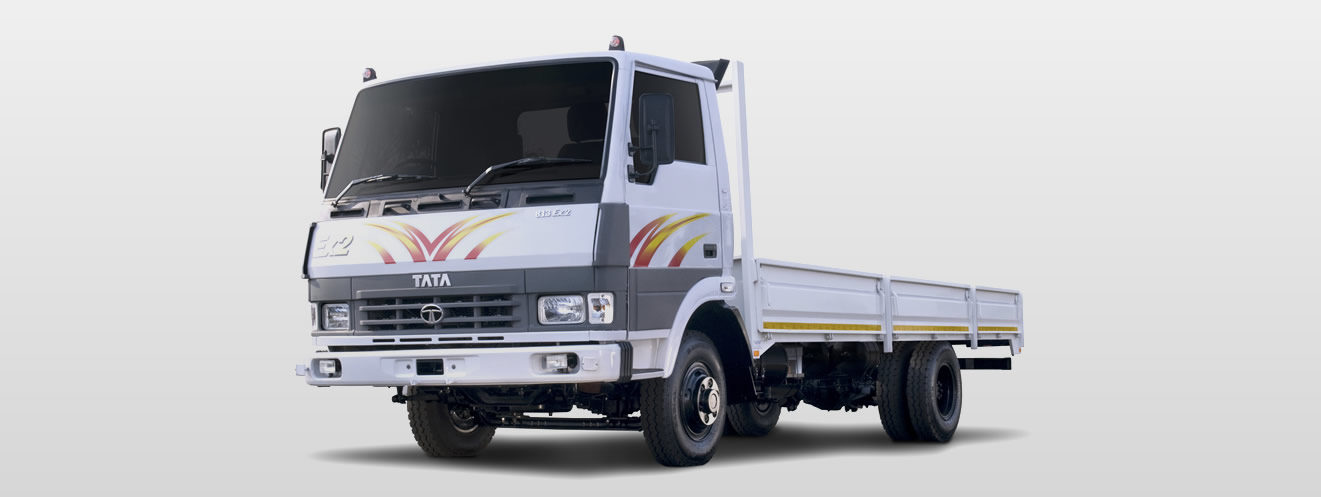
The complete line-up of Tata truck models to be showcased, include the Tata LPT813 (4-ton); the Tata LPT1518 (8-ton); the Tata Ultra 814 (4-5 ton); the Tata LPT2523 (13.5-ton); the Tata LPO918 (38 seater bus) and two models from the Daewoo trucks range: the Daewoo KL3TX (freight carrier) and the Daewoo K7CEF (cargo truck).
The key message we want to deliver this year is that Tata and Daewoo commercial vehicles are cost effective, reliable and easily suited to a huge number of applications and business requirements.
During this year’s event TACSA will offer our customers promotional body discounts, free service plans and one-on-one deal discounts.
Visitors to the Tata Trucks stand will also be able to view new Tata innovations and product introductions. Personal interaction with product and sales specialists from our head office and channel partners will ensure that all visitors will be able to experience the Tata and Daewoo brands first-hand.
Tata vehicles are perfect for the agricultural market due to their inherent ruggedness, durability and reliability. We offer various body applications with our extended range of trucks and buses to suit customer specific requirements.
The low cost of ownership is the main goal of Tata throughout our entire product offering. This is especially important in an industry with low cost of ownership for smaller distances travelled.
Downtime is a cost that needs to be minimised at all cost, therefore TACSA has invested in 91 touch points across Southern Africa to cater for breakdown assistance and support, thus ensuring maximum Uptime. Tata and Daewoo offer outstanding warranties thereby ensuring maximum uptime.